
2026 Ford Escape Hybrid MPG and Powertrain: A Deep Dive
The 2026 Ford Escape Hybrid produces a 192-hp combined system output using a 2.5L Atkinson Cycle I-4 paired with an electric motor. The Plug-In Hybrid variant pushes total system output to 210 hp, while both run on regular unleaded fuel. This page covers how the hybrid powertrain works, which trims carry it, and what it means daily. Browse inventory below.
Feature Overview: Why the Escape Hybrid Powertrain Stands Out
The 2026 Ford Escape lineup gives buyers three distinct powertrain paths: EcoBoost gasoline, Hybrid, and Plug-In Hybrid. The Hybrid and PHEV options share a 2.5L iVCT Atkinson Cycle I-4 engine, but each delivers a different total system output and is aimed at a different type of driver.
The standard Hybrid produces 192 hp combined. The Plug-In Hybrid steps that up to 210 hp combined and adds the ability to run on electric power alone for shorter trips. Both versions run on regular unleaded gasoline, which keeps fueling simple. Neither requires premium fuel to operate correctly.
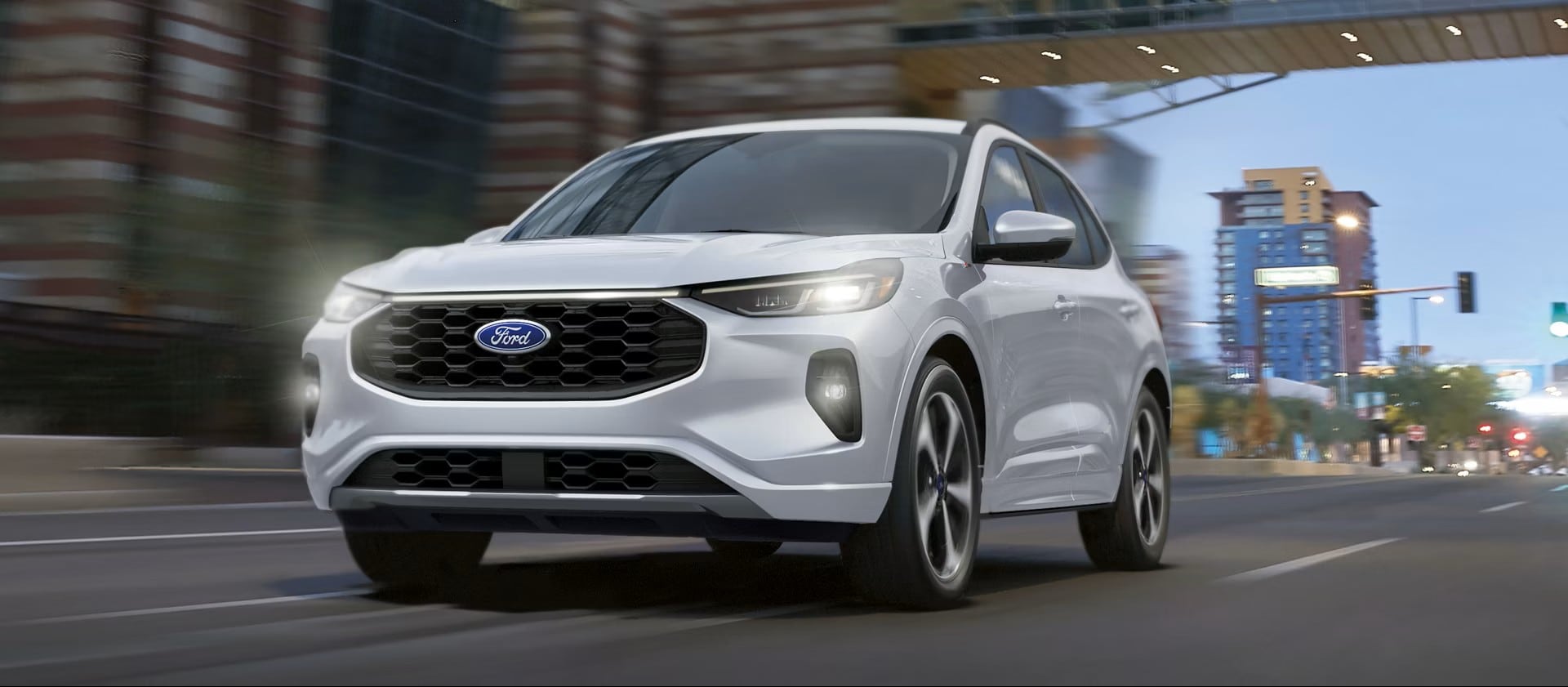
The base 1.5L EcoBoost 3-cylinder is rated at 34 mpg highway on its own. The Hybrid and PHEV powertrains are targeted at buyers who want to reduce fuel stops further, especially in the stop-and-go driving patterns common around Annapolis and the surrounding metro area.
Browse 2026 Escape Hybrid Inventory at Koons Ford
2026 Ford Escape trim comparison
How It Works: The 2.5L Atkinson Cycle Hybrid System
The Escape Hybrid uses a 2.5L Atkinson Cycle I-4 engine rather than a conventional Otto Cycle engine. The Atkinson Cycle design prioritizes fuel efficiency over peak power by using a longer expansion stroke relative to the compression stroke. This means the engine extracts more energy from each combustion event, which reduces fuel consumption at the cost of some raw horsepower.
Ford pairs this engine with an electric motor through an eCVT (electronically controlled continuously variable transmission). The eCVT has no traditional gear steps. Instead, it blends the output of the combustion engine and the electric motor fluidly, choosing the most efficient ratio at any given speed or load condition.
The combined system output of 192 hp (Hybrid) or 210 hp (PHEV) Ford Escape Hybrid powertrain specs reflects the additive peak performance of both the engine and the electric motor together. The engine alone produces 163 hp at 6,250 rpm and 155 lb-ft of torque at 4,500 rpm.
Under light throttle and at lower speeds, the system can run on electric power alone for short durations, reducing fuel burn in traffic. During higher-demand situations, the combustion engine takes over or both sources work together. Regenerative braking recaptures energy during deceleration and feeds it back into the battery, which is why hybrid efficiency often improves in city driving rather than worsening.
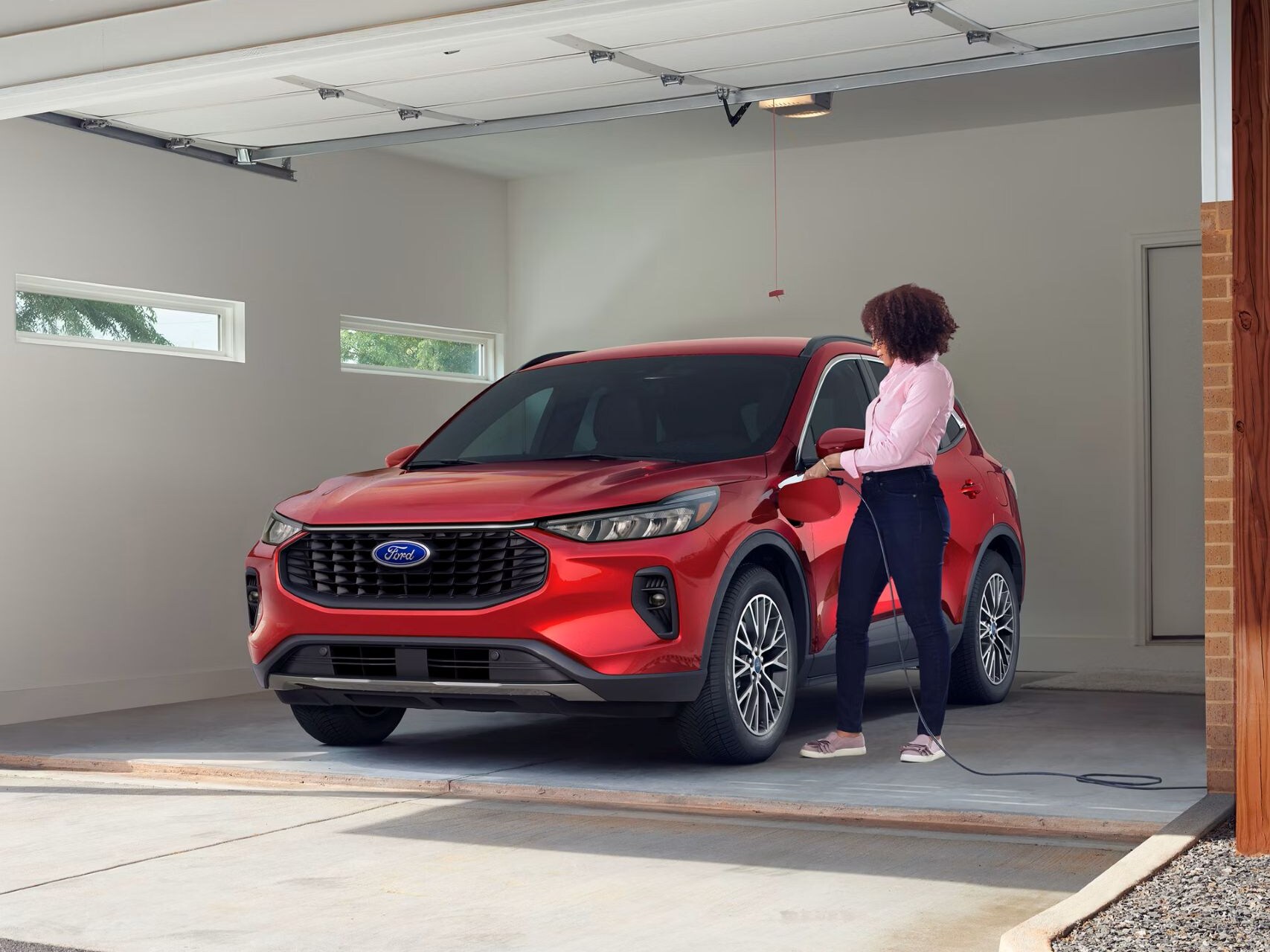
The Plug-In Hybrid version uses the same base engine but carries a larger battery pack, allowing for extended electric-only driving before the combustion engine engages. Its fuel tank shrinks to 11.1 gallons (compared to 14.3 gallons on the standard Hybrid) because battery capacity replaces some of that range need.
AWD on the Hybrid trims uses an AWD Disconnect system, which decouples the rear axle under conditions where all-wheel drive is not needed. This reduces drivetrain drag and improves fuel economy during normal highway cruising. The PHEV is FWD only.
2026 Ford Escape safety features
Across the Trims: Which Escape Gets the Hybrid Powertrain
Four trims in the 2026 Escape lineup are built on the Hybrid or Plug-In Hybrid system:
ST-Line Select AWD Hybrid
This is the entry point into the Hybrid lineup, pairing the 2.5L Atkinson I-4 hybrid system with AWD Disconnect. It includes the 192-hp combined output and standard AWD traction.
Plug-In Hybrid FWD
This trim gets the 210-hp combined PHEV system with the larger battery pack. It is FWD only, with a 11.1-gallon fuel tank. It opens the PHEV experience at a lower price point than the Platinum Hybrid.
Platinum AWD Hybrid
This moves up from the ST-Line Select, adding a higher equipment level while retaining the 192-hp AWD Hybrid powertrain. Towing capacity on Hybrid trims is rated at 1,500 lbs.
ST-Line Elite AWD Hybrid
This is the top Hybrid trim before the Platinum, combining the ST-Line sport styling with the full 192-hp AWD Hybrid system and a higher equipment level than the ST-Line Select.
The non-hybrid EcoBoost trims (1.5L and 2.0L) use a conventional 8-speed automatic transmission and are not part of the eCVT family. The 2.0L EcoBoost AWD trims carry the highest towing rating at 3,500 lbs (with the Class II Trailer Tow Package), while Hybrid trims top out at 1,500 lbs. Buyers who need maximum towing should weigh that difference before choosing a Hybrid trim.
2026 Ford Escape powertrain options
Real-World Benefit: What the Hybrid System Does for Daily Drivers
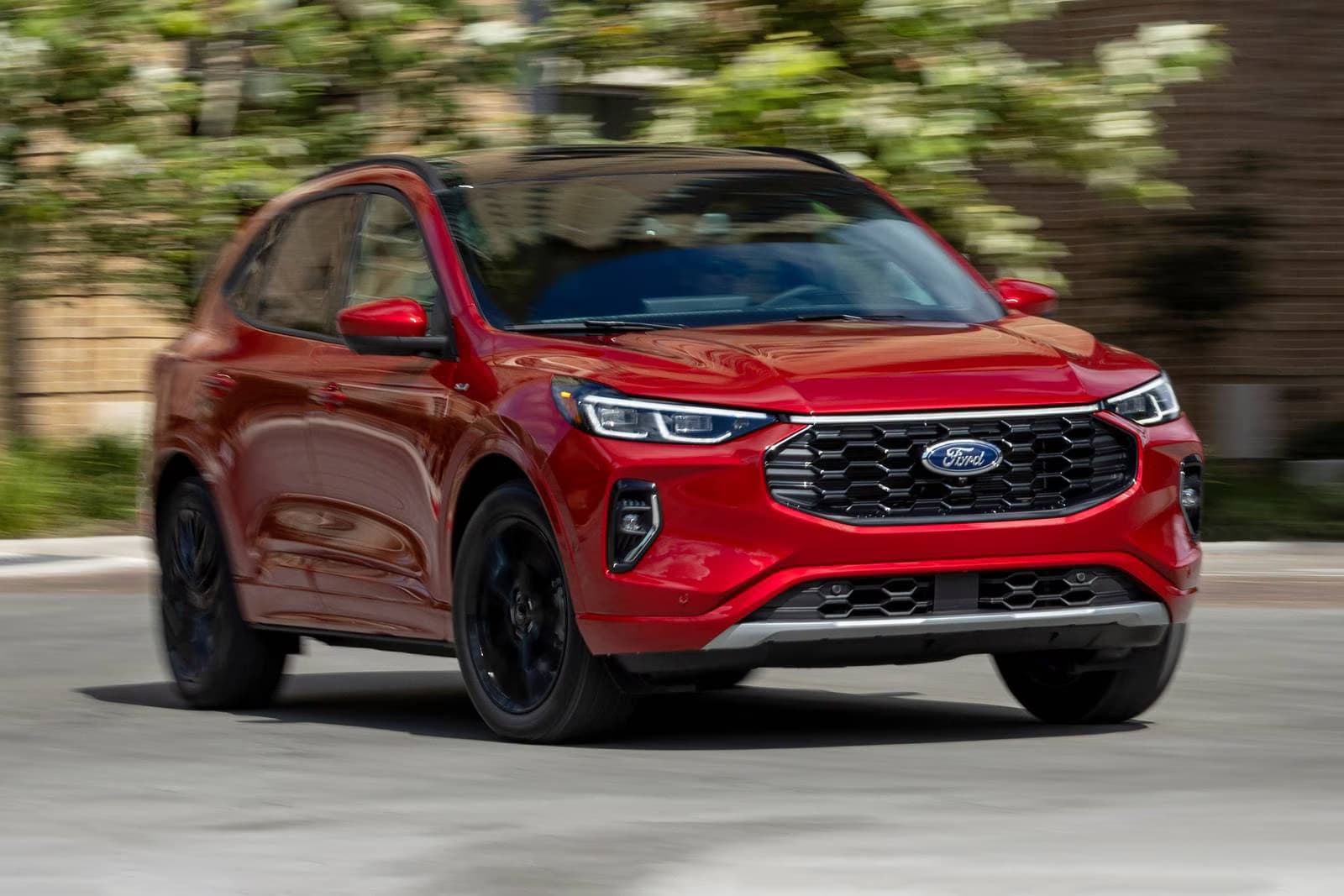
The most direct benefit is fuel cost reduction over time. With a 14.3-gallon fuel tank and a powertrain optimized for city and suburban efficiency, the Escape Hybrid suits drivers who spend significant time in traffic, running errands, or commuting through areas like Annapolis where stop-and-go patterns are routine.
Regenerative braking means the system does more work for itself in congested conditions rather than less. Unlike a conventional engine that converts braking energy entirely into heat, the Escape Hybrid stores that energy and reuses it.
The PHEV trim takes this further. Drivers who charge regularly and have commutes within the electric range of the battery can reduce gasoline consumption substantially on a weekly basis. The 11.1-gallon tank is smaller, but for a driver using electric power for most short trips, refueling frequency drops.
Cargo space in the Hybrid trims is 34.4 cubic feet behind the second row (versus 37.5 on the 1.5L/2.0L EcoBoost trims), and maximum cargo behind the first row is 60.8 cubic feet (versus 65.4 on gasoline trims). The battery pack in the Hybrid and PHEV uses a portion of the underfloor space that would otherwise contribute to cargo capacity. This is a practical trade-off worth checking against your actual hauling needs.
The sliding 60/40 split-fold second-row seats are available across the Escape lineup, including Hybrid trims. This feature adds flexibility when the cargo floor behind the rear seats is not enough.
Second-row legroom on Hybrid and PHEV trims measures 38.9 inches, compared to 40.7 inches on gasoline trims. This reflects the same battery packaging trade-off. For most adult passengers the difference is minor, but taller rear-seat occupants may notice it.
How It Compares: Hybrid Context Against the Segment
The Escape Hybrid's 192-hp combined system output is competitive in the compact SUV hybrid segment. The Atkinson Cycle engine approach is used by multiple manufacturers in this class because it delivers real-world efficiency gains without requiring exotic fuel grades or complex maintenance.
The PHEV's 210-hp combined output gives it a performance edge over the standard Hybrid within the Escape lineup. Ford does not publish an official electric-only range figure in the provided specs, but the larger battery pack and smaller fuel tank are structural indicators of a meaningful EV-capable range.
The base 1.5L EcoBoost 3-cylinder is rated at 34 mpg highway, which is a genuine benchmark for a non-hybrid gasoline compact SUV. The Hybrid trims are aimed at buyers who want to build further on that efficiency, particularly in city conditions where the electric motor contribution is highest.
Competitors in the hybrid compact SUV space include the Toyota RAV4 Hybrid and the Honda CR-V Hybrid. What is clear from the Escape's own lineup is that the Hybrid system adds efficiency, increases system horsepower versus the base engine, and comes standard with AWD on three of the four Hybrid trim levels.
EPA fuel economy comparison tool
See the 2026 Ford Escape Hybrid at Koons Ford in Annapolis
The 2026 Ford Escape Hybrid lineup offers a range of entry points, from the ST-Line Select AWD Hybrid to the ST-Line Elite AWD Hybrid and Platinum AWD Hybrid. The PHEV trim extends that range for drivers who want a charging option. Koons Ford carries the 2026 Escape across its Annapolis location, with current inventory available online.
Check live inventory to see which Hybrid and PHEV trims are in stock, or schedule a test drive to feel the eCVT system in city conditions where it makes the most difference.
Frequently Asked Questions
What is the total system horsepower of the 2026 Ford Escape Hybrid?
The 2026 Ford Escape Hybrid produces 192 hp combined, calculated from the 2.5L Atkinson Cycle I-4 engine and the electric motor together. The Plug-In Hybrid version produces 210 hp combined.
Does the 2026 Ford Escape Hybrid require premium fuel?
No. Both the Hybrid and Plug-In Hybrid trims run on regular unleaded gasoline. Premium fuel is recommended (not required) only on the 2.0L EcoBoost trim.
Which 2026 Ford Escape trims include the Hybrid powertrain?
Four trims use the Hybrid or Plug-In Hybrid system: ST-Line Select AWD Hybrid, Plug-In Hybrid FWD, Platinum AWD Hybrid, and ST-Line Elite AWD Hybrid.
Does the 2026 Ford Escape Hybrid come with AWD?
Three of the four Hybrid trims (ST-Line Select, Platinum, and ST-Line Elite) come standard with AWD using Ford's AWD Disconnect system. The Plug-In Hybrid is FWD only.
How does the Escape Hybrid's cargo space compare to the gasoline models?
The Hybrid and PHEV trims offer 34.4 cubic feet behind the second row and 60.8 cubic feet behind the first row. Gasoline trims (1.5L and 2.0L) provide 37.5 and 65.4 cubic feet respectively, because the battery pack occupies some underfloor space.
What is the towing capacity of the 2026 Ford Escape Hybrid?
Hybrid and Plug-In Hybrid trims are rated to tow up to 1,500 lbs. For maximum towing of 3,500 lbs, the 2.0L EcoBoost AWD trim with the Class II Trailer Tow Package is the right choice.
What warranty covers the Hybrid components on the 2026 Ford Escape?
Ford covers hybrid components on the 2026 Escape with an 8-year / 100,000-mile warranty, separate from the 3-year / 36,000-mile bumper-to-bumper and 5-year / 60,000-mile powertrain warranties that apply to the full lineup.