
2026 Ford Ranger Raptor Trim and Towing Capacity: Complete Feature Guide
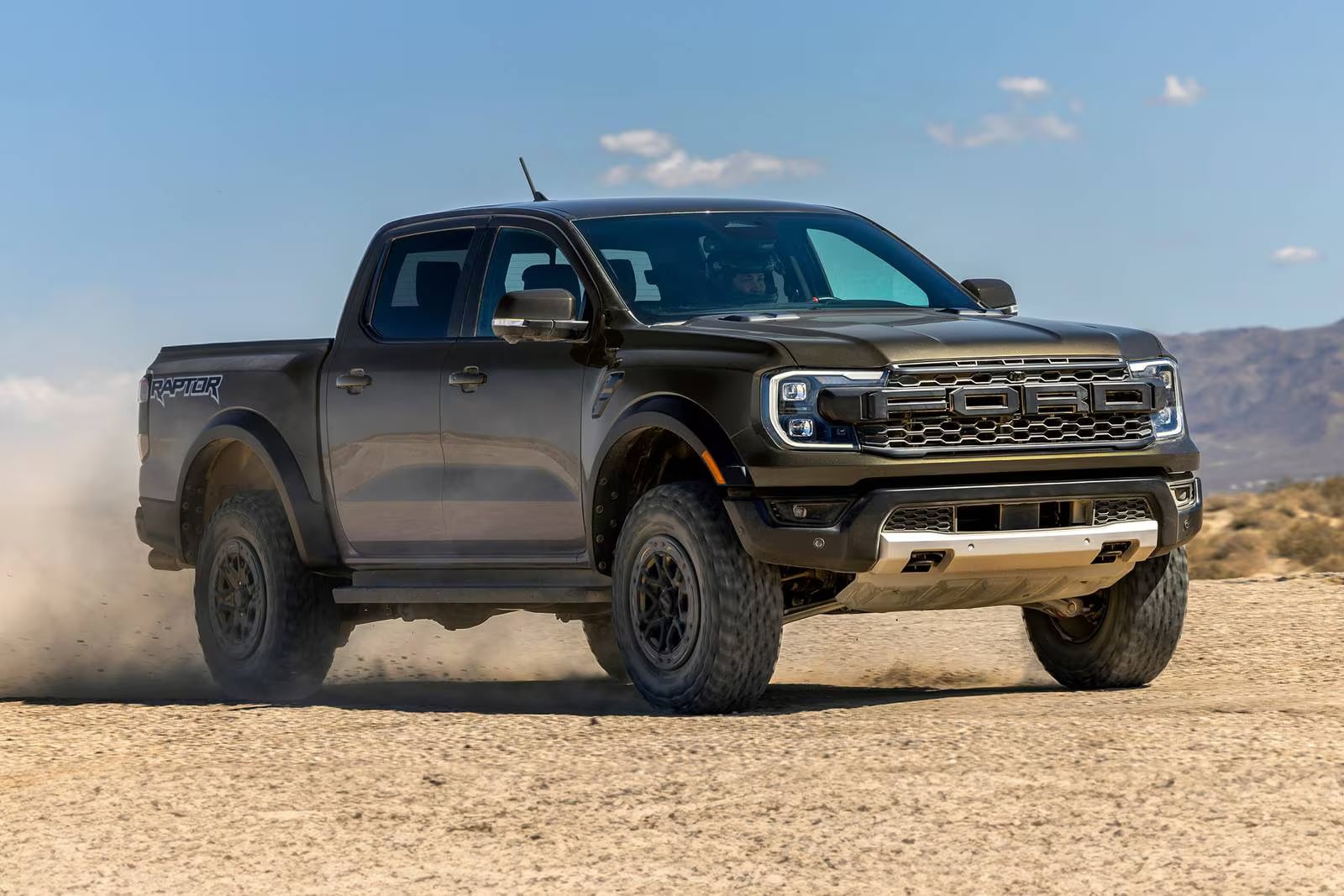
The 2026 Ford Ranger Raptor produces 405 hp from its 3.0L twin-turbo V6, the most powerful Ranger engine available. Base XL, XLT, and Lariat trims tow up to 7,500 lbs, while the Raptor is tuned for terrain over trailer weight at 5,510 lbs. This page breaks down how every engine and trim stacks up on power, towing, and off-road hardware, with current inventory at Koons Ford.
Feature Overview: Two Distinct Purposes Inside One Nameplate
The 2026 Ranger lineup splits into two clearly different tools. The XL, XLT, and Lariat trims prioritize workday usefulness, 7,500 lbs of tow capacity, up to 1,767 lbs of payload, and fuel economy reaching 25 mpg highway on the 4x2 configuration. The Raptor sits at the opposite end of intent. Its job is covering difficult terrain at speed, and Ford engineered every system around that goal rather than maximum towing numbers.
What makes the Raptor worth understanding as a standalone product is the scale of the hardware difference. The suspension geometry, shock absorber specification, chassis width, and engine choice are all unique to that trim. Buyers in Annapolis comparing a well-equipped Lariat to a Raptor are not choosing between option levels, they are choosing between two trucks with different primary functions.
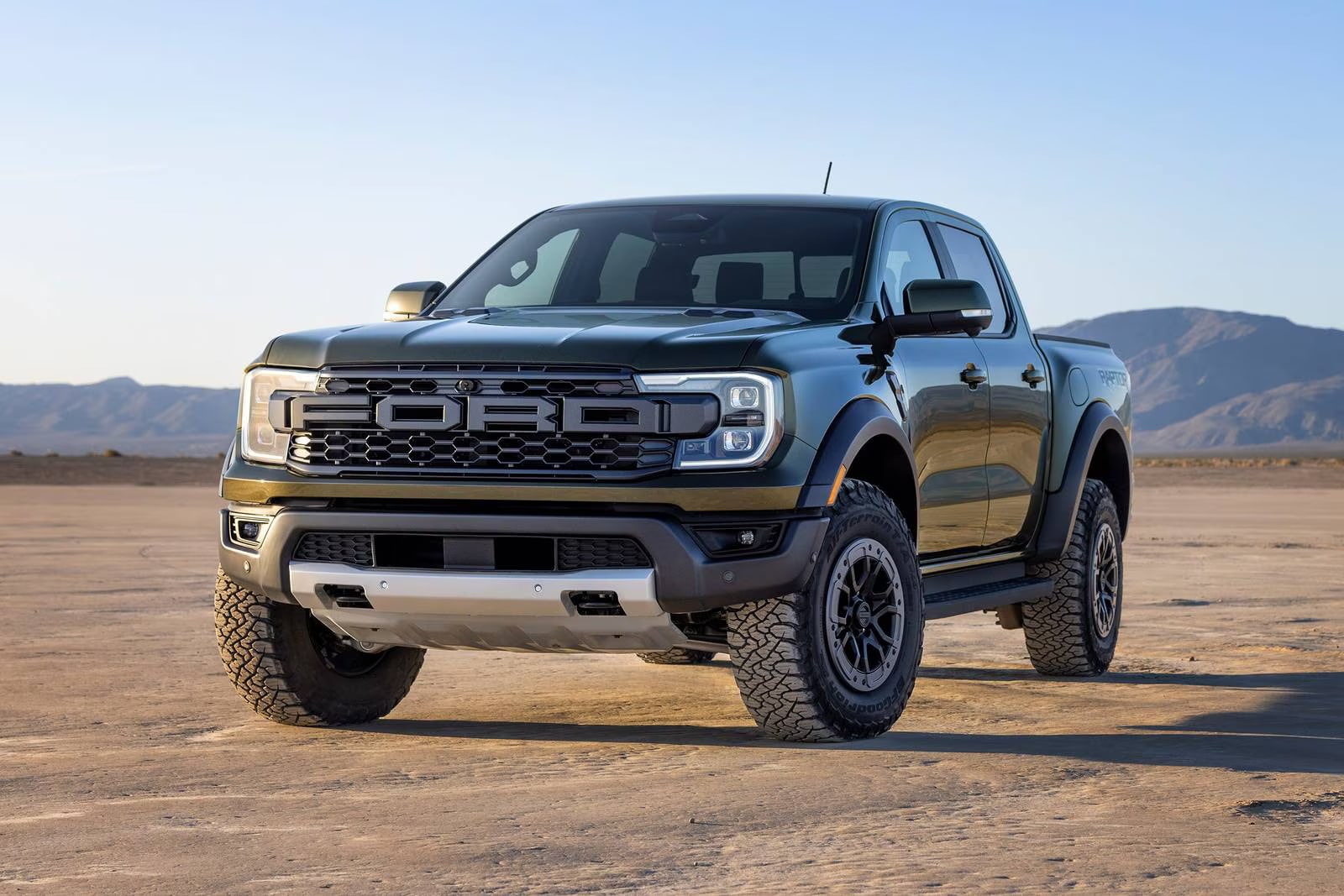
2026 Ford Ranger full trim overview
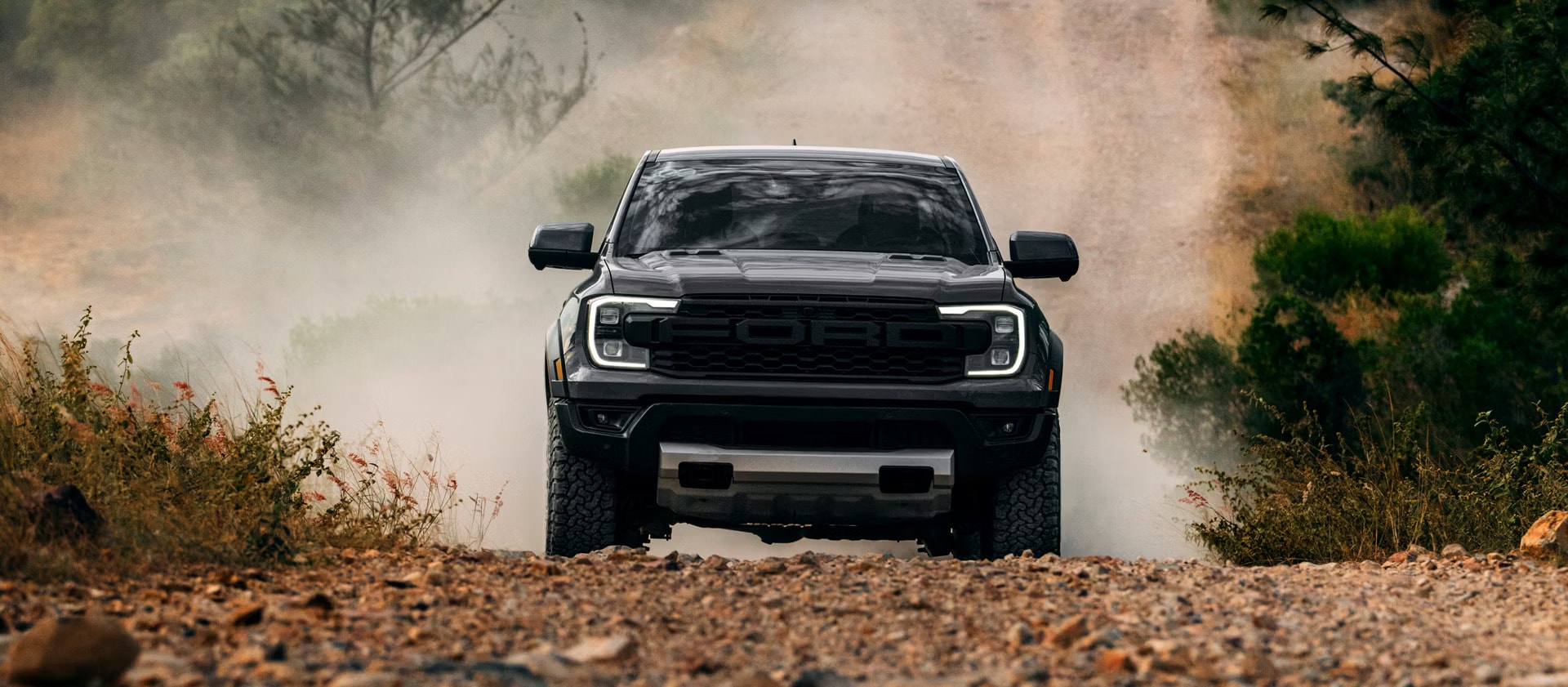
How It Works: The Raptor's 3.0L EcoBoost and FOX Suspension System
The Raptor's 3.0L EcoBoost twin-turbocharged V6 produces 405 hp and 430 lb-ft of torque. That engine requires 91-octane fuel and carries a 7.0-quart oil capacity, compared to 5.6 quarts on the base 2.3L four-cylinder. All three engines connect to the same 10-speed SelectShift automatic transmission with Tow/Haul mode standard.
Where the Raptor separates itself from the rest of the lineup is below the body. The front suspension uses short- and long-arm independent geometry with forged aluminum A-arms, and each corner gets a coil-over gas-pressurized FOX 2.5-inch Internal Bypass shock with Live Valve Technology. The rear replaces the Lariat's leaf-spring setup with a Watts-link configuration using trailing arms and FOX Internal Bypass shocks with piggyback reservoirs and Live Valve Technology.
That suspension geometry widens the Raptor's track to 67.3 inches front and rear, compared to 63.8 inches on XL, XLT, and Lariat. The body grows to 79.8 inches wide (excluding mirrors), and ground clearance increases to 10.7 inches versus 9.3 inches on the standard trims. The approach angle reaches 33.0 degrees and the ramp breakover angle measures 24.2 degrees, both improvements over the 30.2-degree and 23.0-degree figures on the rest of the lineup.
Ford Ranger Raptor suspension specifications
Across the Trims: Power, Towing, and Payload by Configuration
Every Ranger rides a 128.7-inch wheelbase. The differences emerge in drivetrain and engine choice.
| Trim | Engine | Power | Max Towing | Max Payload | EPA Rating |
|---|---|---|---|---|---|
| XL 4x2 / 4x4 | 2.3L EcoBoost four-cylinder | 270 hp / 310 lb-ft | 7,500 lbs | Up to 1,767 lbs on 4x2 / up to 1,763 lbs on 4x4 | 21 city / 25 hwy on 4x2 and 19 city / 24 hwy on 4x4 |
| XLT 4x2 / 4x4 | 2.3L EcoBoost four-cylinder or available 2.7L EcoBoost V6 | 270 hp / 310 lb-ft or 315 hp / 400 lb-ft | 7,500 lbs | Up to 1,767 lbs with 2.3L / 1,513 lbs with 2.7L | 18 city / 23 hwy on 4x4 with 2.7L |
| Lariat 4x2 / 4x4 | 2.3L EcoBoost four-cylinder or available 2.7L EcoBoost V6 | 270 hp / 310 lb-ft or 315 hp / 400 lb-ft | 7,500 lbs | Varies by configuration | Varies by drivetrain and engine |
| Raptor 4x4 | 3.0L EcoBoost twin-turbo V6 | 405 hp / 430 lb-ft | 5,510 lbs | 1,373 lbs | 16 city / 18 hwy |
XL (4x2 and 4x4): The standard 2.3L EcoBoost four-cylinder produces 270 hp and 310 lb-ft. The 4x2 tows 7,500 lbs and carries up to 1,767 lbs of payload. The 4x4 matches the tow number and carries up to 1,763 lbs. EPA ratings are 21 city / 25 hwy on 4x2 and 19 city / 24 hwy on 4x4.
XLT (4x2 and 4x4): Same 2.3L base engine, same tow and payload figures as XL. The 2.7L EcoBoost V6 becomes available on XLT, producing 315 hp and 400 lb-ft. The 4x4 with the 2.7L tows 7,500 lbs and rates 18 city / 23 hwy. Payload with the 2.7L reaches 1,513 lbs.
Lariat (4x2 and 4x4): The Lariat is the most feature-loaded non-Raptor trim, available with the 2.3L or the 2.7L. Tow capacity holds at 7,500 lbs when equipped with the available trailer tow package. Tech options include the available 12-inch touchscreen and digital instrument cluster, B&O sound system, 360-degree camera, and Pro Trailer Backup Assist.
Raptor (4x4 only): The 3.0L twin-turbo V6 is exclusive to this trim. Maximum conventional towing drops to 5,510 lbs because the suspension geometry and heavier curb weight (5,363 lbs base) reduce the net tow rating. Payload capacity is 1,373 lbs. The Raptor holds 20 gallons of fuel versus 18 gallons in all other configurations. EPA rating is 16 city / 18 hwy.
2026 Ranger engine and specs comparison
Real-World Benefit: What These Numbers Mean on the Road and Off
For buyers near Annapolis who haul boats to the Chesapeake Bay or move equipment to job sites, the XL and XLT with the 2.3L or 2.7L engine deliver the most practical towing setup. Seven thousand five hundred pounds covers most mid-size trailers, powerboats under 22 feet, and utility loads.
For buyers who want the Raptor, the real-world value is in terrain capability. The Live Valve Technology in the FOX shocks reads driving conditions and adjusts damping in real time. The Watts-link rear suspension keeps the axle positioned more precisely under load than the leaf-spring setup, which reduces body movement during side-to-side terrain changes. On pavement, that same geometry gives the Raptor a noticeably wider planted feel, the 67.3-inch track is 3.5 inches wider than any other Ranger configuration.
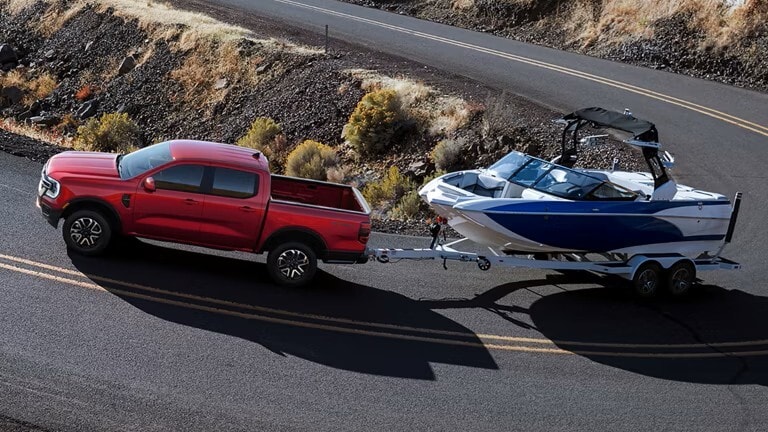
The Pro Power Onboard 400-watt in-bed outlet, available across multiple trims, adds on-site power for tools or camping gear. The available 360-degree camera system helps with trailer hookup and tight maneuvering regardless of trim. SYNC 4A with over-the-air software updates keeps the infotainment current without a service visit.
2026 Ranger technology features
How It Compares: The Raptor in the Mid-Size Truck Segment
The 2026 Ranger Raptor's 405 hp output places it at the top of the mid-size performance truck segment. The FOX 2.5-inch Live Valve shocks are typically reserved for full-size desert-racing-inspired trucks, and the Raptor brings that hardware into a mid-size footprint. The Watts-link rear suspension is a design choice shared with purpose-built performance trucks, not a feature commonly found on standard mid-size pickups.
The tradeoff is the lower tow rating. Buyers who compare the Raptor directly against the Lariat on a spreadsheet will see a 1,990-lb towing disadvantage. That gap is not an oversight, it reflects the suspension geometry required to perform at speed over rough terrain, which changes the weight distribution and GCWR. The Raptor's GCWR is 11,465 lbs, while the 2.7L 4x4 Lariat configuration reaches 12,745 lbs.
For shoppers who want maximum tow capacity in a Ranger, the 2.7L EcoBoost in XLT or Lariat trim delivers more total capability. For shoppers who want a factory-built performance truck in a size that fits Annapolis parking and Maryland back roads equally well, the Raptor has no direct equivalent in the Ranger lineup.
EPA fuel economy data for the 2026 Ford Ranger
See the 2026 Ford Ranger Raptor at Koons Ford in Annapolis
Koons Ford carries the full 2026 Ranger lineup, from the capable XL to the Raptor. Whether you need 7,500 lbs of tow capacity for weekend hauls or FOX shocks for serious off-road use, the current inventory includes multiple configurations ready to test drive. Check live stock online or visit the Annapolis location to compare trims side by side.
Frequently Asked Questions
Does the 2026 Ford Ranger Raptor have the highest tow capacity in the lineup?
No. The Raptor tows up to 5,510 lbs, while the XL, XLT, and Lariat trims tow up to 7,500 lbs when properly equipped with the trailer tow package. The Raptor's suspension tuning reduces its net tow rating relative to the rest of the lineup.
What engine does the 2026 Ford Ranger Raptor use?
The Raptor uses a 3.0L EcoBoost twin-turbocharged V6 producing 405 hp and 430 lb-ft of torque. It requires 91-octane fuel and is exclusive to the Raptor trim.
What is the maximum towing capacity for the standard 2026 Ford Ranger?
7,500 lbs is the maximum conventional towing figure for the XL, XLT, and Lariat trims when properly configured with the available trailer tow package. This applies to both 4x2 and 4x4 versions with either the 2.3L or 2.7L engine.
What type of suspension does the 2026 Ranger Raptor use?
The Raptor uses coil-over FOX 2.5-inch Internal Bypass shocks with Live Valve Technology at the front and FOX Internal Bypass shocks with piggyback reservoirs and Live Valve Technology at the rear. The rear suspension uses a Watts-link design with trailing arms rather than the leaf springs on other Ranger trims.
How wide is the 2026 Ranger Raptor compared to standard trims?
The Raptor measures 79.8 inches wide (excluding mirrors) versus 75.5 inches on the XL, XLT, and Lariat. Its front and rear track width is 67.3 inches compared to 63.8 inches on all other trims.
Does the 2026 Ford Ranger come in 4x2 or is 4x4 required?
4x2 is available on the XL, XLT, and Lariat trims. The Raptor comes exclusively in 4x4. All non-Raptor trims offer an optional 4x4 upgrade.
What fuel economy does the 2026 Ranger Raptor get?
The Raptor is EPA-rated at 16 city / 18 hwy. The base 2.3L 4x2 configuration rates 21 city / 25 hwy, and the 2.3L 4x4 rates 19 city / 24 hwy.