

2027 Ford Explorer 3rd Row Seating & Interior Dimensions
The 2027 Ford Explorer seats 7 passengers with 31.8 inches of third-row leg room and up to 85.8 cubic feet of total cargo space. That cargo figure nearly doubles what several rivals offer, and third-row head room measures a generous 38.9 inches. This page breaks down every interior dimension by row and trim, with current inventory available at Koons Ford.
Third Row Seating and Cargo: What the Numbers Mean
The 2027 Explorer delivers a true three-row family SUV layout without the bulk of a full-size body-on-frame truck. Seven seats fit within a 198.7-inch overall length, which keeps the Explorer maneuverable in Annapolis traffic while still providing usable space in every row.
The third row is the headline story. At 31.8 inches of leg room, it outpaces many midsize competitors that treat the third row as a token jump seat. Third-row shoulder room reaches 54.6 inches, which is wide enough for two adults or three children to sit without constant contact. Head room back there holds at 38.9 inches on all trims except Platinum models equipped with the optional moonroof, where it remains the same.
Cargo is equally notable. With all rows occupied, 16.3 cubic feet sits behind the third row, enough for a week's worth of grocery bags or a full set of sports gear. Fold the third row and that expands to 46 cubic feet behind the second row. Drop all rear seats and the Explorer opens to 85.8 cubic feet of maximum cargo volume. The ST, Tremor, and Platinum trims measure 85.3 cubic feet maximum, a difference of half a cubic foot.
Full 2027 Explorer specs and trim comparison
How the Three-Row Layout Works
Ford engineers the Explorer around a rear-wheel-drive platform with a 119.1-inch wheelbase. That long wheelbase is what creates the interior depth that benefits second and third-row passengers.
The second row offers 37.5 inches of leg room on Active and ST-Line trims, dropping to 37.0 inches on ST, Platinum, and Tremor trims due to slightly different seat track configurations. Second-row head room is 40.5 inches, and shoulder room is 61.9 inches, which gives the middle bench true adult comfort.
The third row is accessed through a tumble-forward second-row seat. Once seated back there, passengers benefit from 40.9 inches of hip room and 54.6 inches of shoulder room. Those numbers make the third row livable on longer drives, not just adequate for short errands.
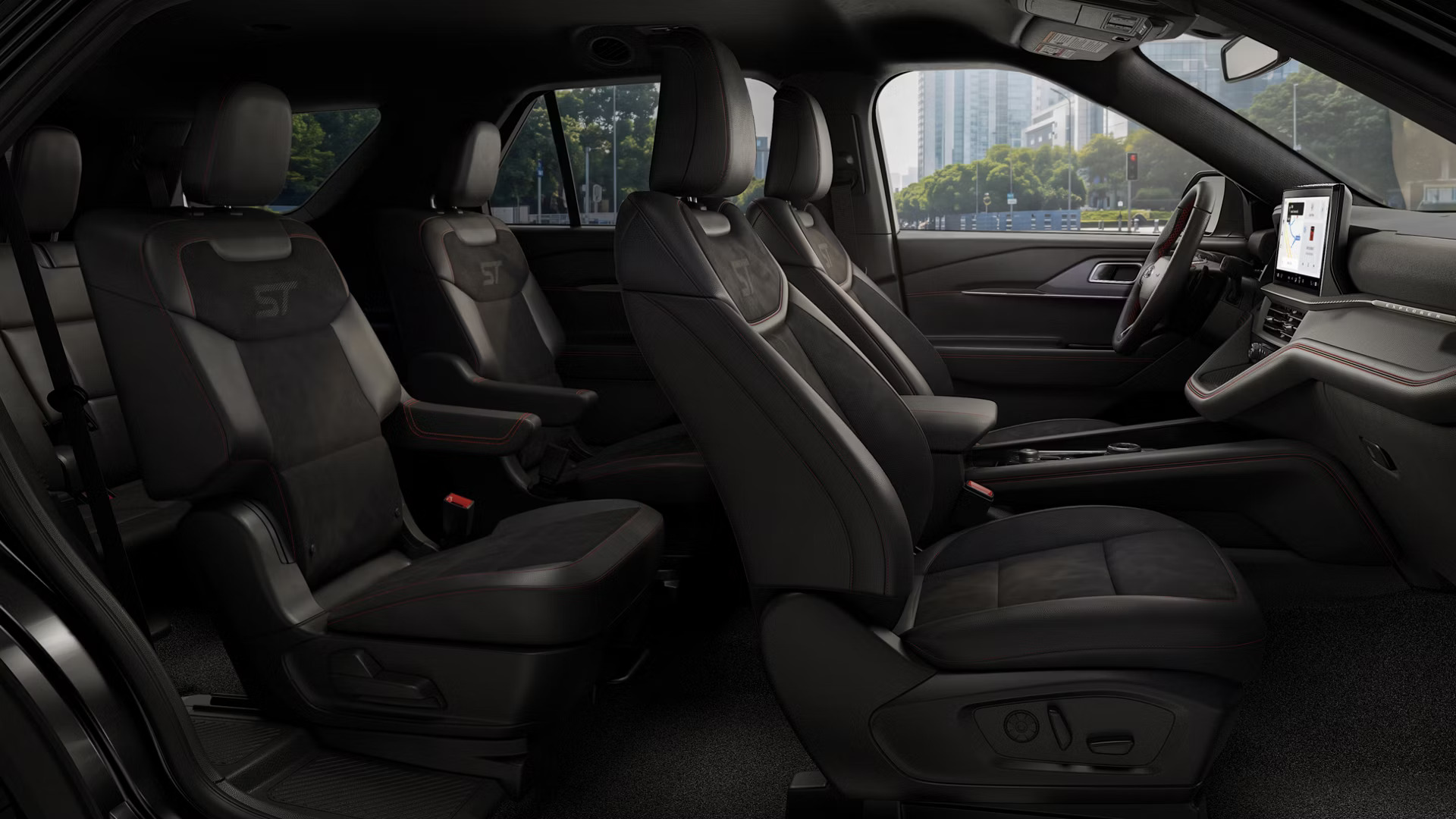
Front row occupants are not shortchanged. First-row leg room extends to 43.0 inches (42.9 on ST, Platinum, and Tremor), head room is 40.7 inches, and shoulder room reaches 62.1 inches. Total passenger volume across all three rows is 150.3 cubic feet on Active and ST-Line, and 149.5 cubic feet on ST and Tremor trims.
2027 Explorer seating and cargo details
Across the Trims: Seating Capacity and Key Differences
All five 2027 Explorer trims, Active, ST-Line, ST, Platinum, and Tremor, seat 7 passengers. The Tremor trim is the single exception on paper in some earlier spec sheets, but Ford's published specification tables confirm 7-seat capacity across the lineup.
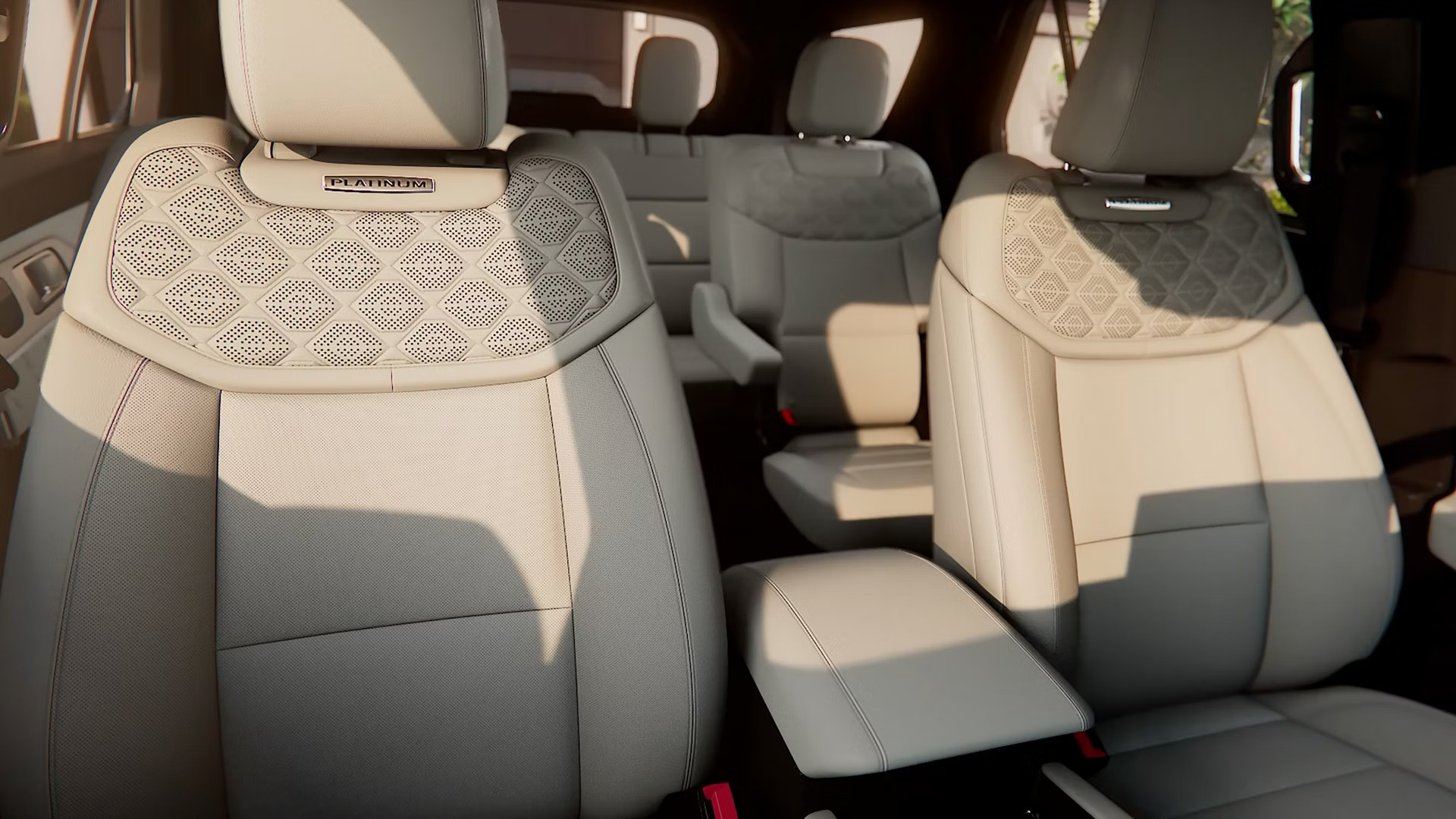
Trim-level differences that affect the interior experience are focused on tech and comfort rather than raw dimensions. The Platinum trim adds a moonroof option that reduces first and second-row head room to 38.9 and 38.2 inches respectively. Buyers who prioritize maximum head room throughout should consider Active or ST-Line trim without the moonroof option.
The 13.2-inch center touchscreen and 12.3-inch digital instrument cluster are standard across trims, so the front cabin carries the same technology footprint regardless of which configuration a buyer chooses. The 360-degree surround-view camera system, which helps when parking a vehicle that spans nearly 89 inches wide including mirrors, is standard on ST-Line and above.
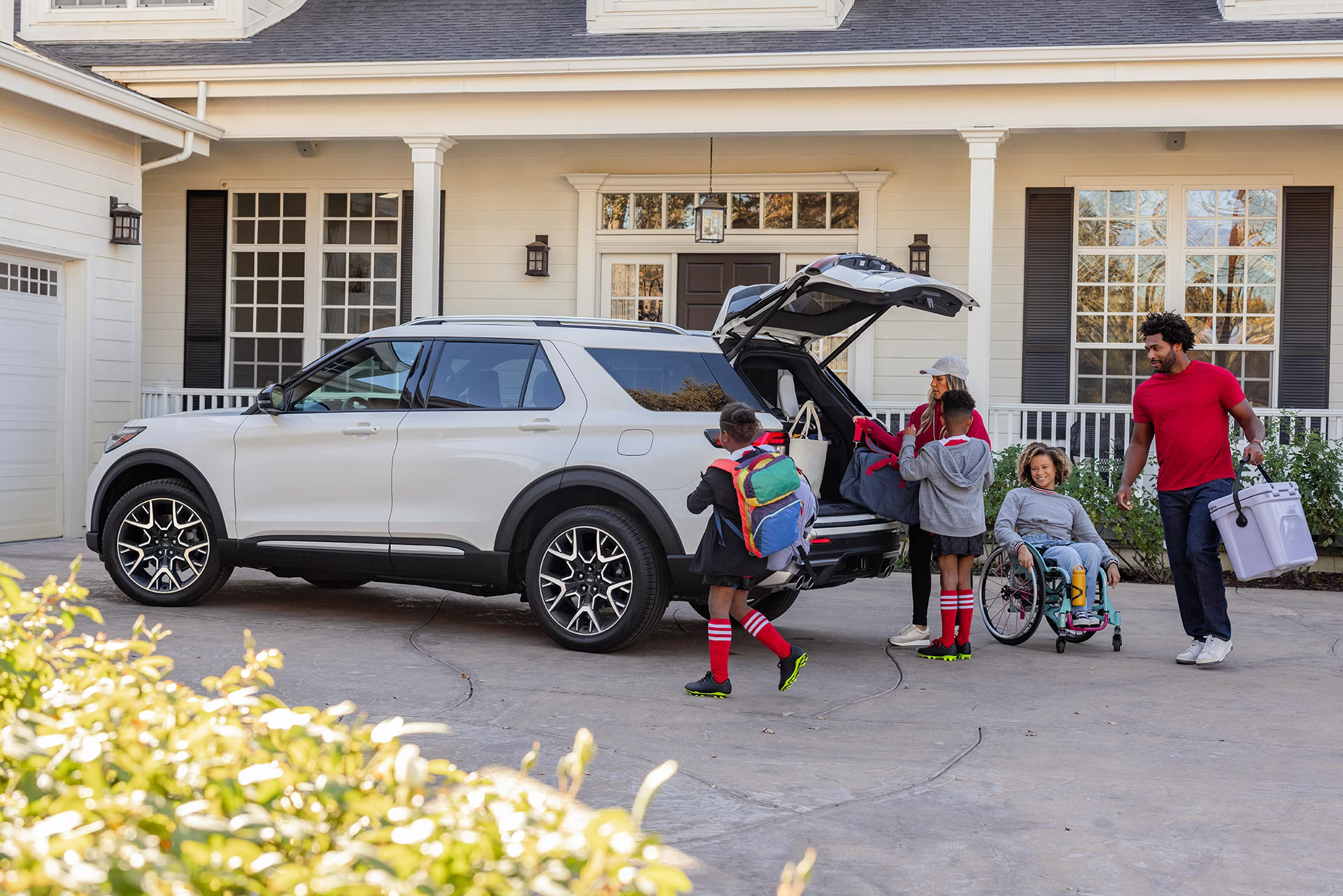
Cargo access is enhanced by a power liftgate with key fob open and close capability. The ST and Platinum trims add an Open On Approach liftgate that unlocks and rises as the driver walks toward the rear with the key fob in a pocket or bag.
2027 Explorer technology features
Real-World Benefit: Living With 7 Seats and 85 Cubic Feet
For families who use every seat, the 31.8 inches of third-row leg room is the detail that changes how the vehicle actually lives day to day. On school runs, weekend trips to the Chesapeake Bay, or highway drives up to Baltimore and beyond, the third row stays occupied because it is comfortable enough to choose.
The 16.3 cubic feet behind the third row handles real cargo when all seven seats are filled. A stroller, a cooler, or a weekend bag fits back there without requiring anyone to surrender their seat. When two or three seats open up, the cargo area grows quickly toward that 85-cubic-foot ceiling.

The 5,000-pound tow rating adds another dimension to the utility math. Families who tow a small boat, a jet ski, or a utility trailer can do so without stepping up to a larger, less fuel-efficient vehicle. The 2.3L EcoBoost engine returns 20 city / 27 highway / 24 combined MPG, a number that holds up well given the Explorer's size and capability.
The Ford Connectivity Package, included for the first year, adds streaming, on-board entertainment, and games while parked. On long trips with a full third row, that feature reduces the demand on parents to provide entertainment from the front seat.
EPA fuel economy ratings for 2027 Ford Explorer
How It Compares: Third-Row Space in the Midsize Class
The 2027 Explorer's 31.8 inches of third-row leg room and 85.8 cubic feet of maximum cargo are benchmarks in the midsize three-row SUV segment. Many rivals in this class provide third rows that measure closer to 27 to 29 inches of leg room, which is fine for children but uncomfortable for adults on any drive longer than 20 minutes.
The Explorer's 119.1-inch wheelbase is the structural reason the third row works. Competitors with shorter wheelbases either compress the third row or shorten cargo space to hit their own numbers. The Explorer avoids that trade-off by keeping cargo behind the third row at 16.3 cubic feet, a volume that is functional, not symbolic.
The BlueCruise hands-free highway driving system, available on ST-Line and Tremor, adds another edge for buyers who regularly drive longer routes with a full vehicle. Letting the vehicle manage steering, acceleration, and braking on compatible highways reduces driver fatigue on trips that fill all three rows.
See the 2027 Explorer at Koons Ford in Annapolis
The 2027 Ford Explorer's three-row layout, with 31.8 inches of third-row leg room, 38.9 inches of third-row head room, and 85.8 cubic feet of maximum cargo space, makes it one of the most practical choices in the midsize SUV segment. Koons Ford in Annapolis has available Explorer inventory ready to view in person.
Frequently Asked Questions
Does the 2027 Ford Explorer really seat 7 adults comfortably in the third row?
Yes. The 2027 Explorer third row provides 31.8 inches of leg room, 38.9 inches of head room, and 54.6 inches of shoulder room. Those dimensions accommodate adults on most trips, though very tall passengers may prefer the second row on extended highway drives.
How much cargo space does the 2027 Explorer have behind the third row?
16.3 cubic feet sits behind the third row with all seats occupied. Fold the third row and that grows to 46 cubic feet. Drop all rear seats and the maximum cargo volume reaches 85.8 cubic feet on Active and ST-Line trims, and 85.3 cubic feet on ST, Platinum, and Tremor trims.
What is the second-row leg room in the 2027 Explorer?
37.5 inches on Active and ST-Line trims. ST, Platinum, and Tremor trims measure 37.0 inches due to seat configuration differences. Both figures support comfortable adult seating in the second row.
Does the Platinum trim's moonroof reduce third-row head room?
No. The Platinum moonroof option reduces first-row head room to 38.9 inches and second-row head room to 38.2 inches. Third-row head room remains at 38.9 inches across all trims.
How long and wide is the 2027 Ford Explorer?
The Explorer measures 198.7 inches long, 78.9 inches wide excluding mirrors, and 89.3 inches wide including mirrors. Height varies by trim from 69.6 inches on Active and ST-Line to 70.8 inches on the Tremor.
What is the wheelbase of the 2027 Explorer and why does it matter for third-row space?
The Explorer rides on a 119.1-inch wheelbase. That measurement is the primary reason the third row delivers competitive leg room. A longer wheelbase stretches the distance between axles, giving designers more interior floor space to distribute across three rows.
Does every 2027 Explorer trim include a third row?
Yes. All five trims, Active, ST-Line, Tremor, ST, and Platinum, include a three-row configuration and seat 7 passengers.