

2026 Ford Expedition Cargo Capacity and 3rd-Row Legroom: Full Breakdown
The 2026 Ford Expedition MAX delivers up to 108.5 cu ft of total cargo capacity and 43.5 inches of third-row legroom. That is a 9-inch longer wheelbase than the standard Expedition, translating directly into usable cabin space. This page breaks down every cargo number by body length and trim, with inventory available at Koons Ford.
Feature Overview: Why Cargo and 3rd-Row Space Matter on the 2026 Expedition
Full-size SUVs are often purchased on the promise of hauling eight passengers without sacrificing luggage room. The 2026 Expedition backs that promise with verified numbers. The standard-wheelbase Expedition offers 22.9 cu ft behind its third row, 69.9 cu ft behind its second row with seats forward, and 180.5 cu ft with both rear rows folded. The Expedition MAX pushes those figures to 37.4 cu ft, 84.5 cu ft, and 123.1 cu ft respectively. The MAX's total max cargo number of 108.5 cu ft is the figure most shoppers want, and it applies when all rear seating is folded.
Third-row legroom tells a different story than cargo alone. The standard Expedition provides 36.5 inches of third-row legroom with the second row in the normal position. Slide that second row fully forward, and third-row occupants gain up to 43.5 inches, enough to seat most adults without compromise. The MAX body shares the same 43.5-inch maximum third-row legroom figure. This flexibility matters most on longer drives, whether that is a run down I-97 toward the Bay Bridge or a longer haul from Annapolis toward the Appalachians.
2026 Ford Expedition Full Specs
How It Works: Body Length, Seat Position, and the Flex Console
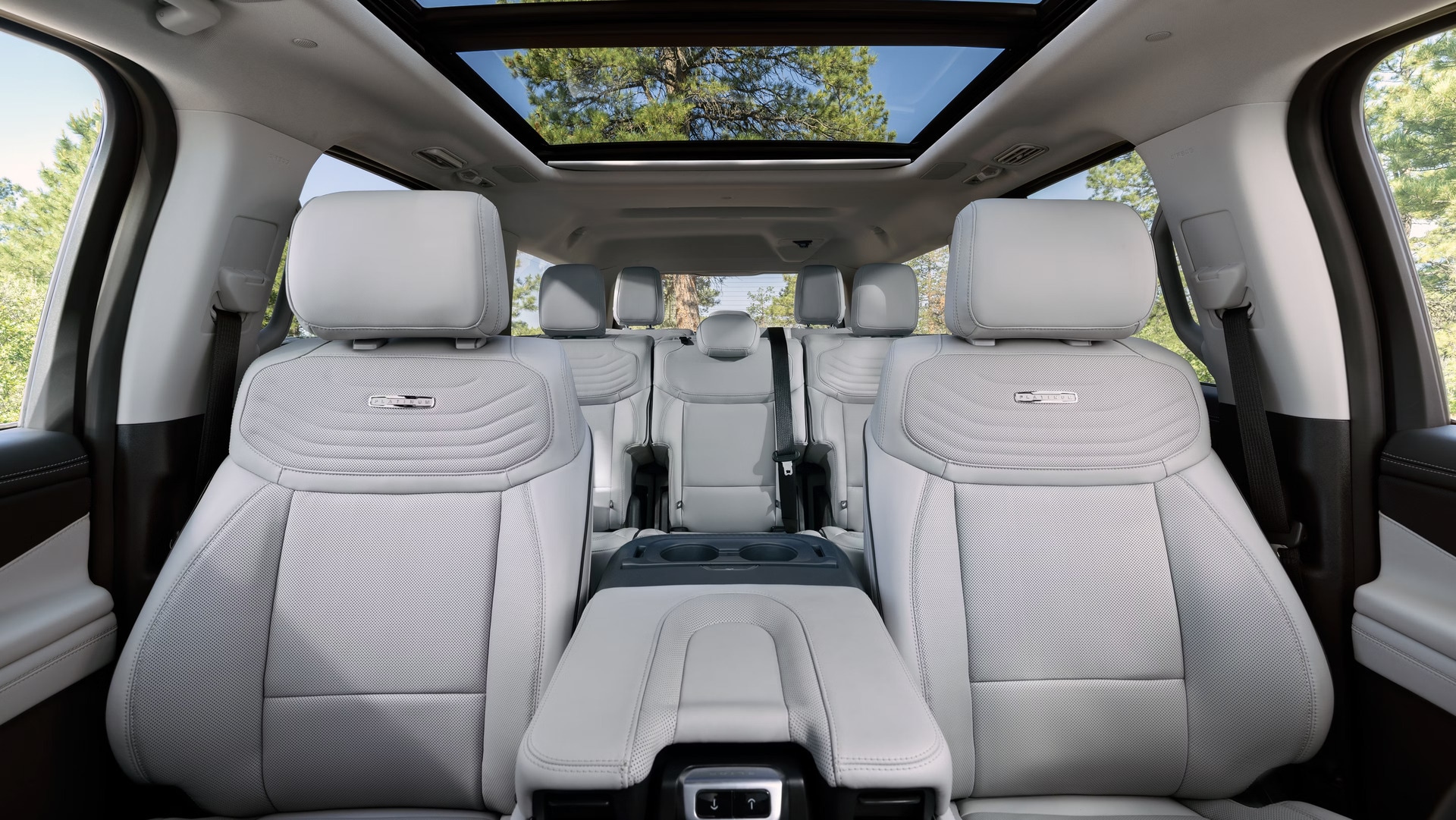
Ford engineers the cargo and legroom flexibility around two mechanisms. First, body length. The MAX's 131.5-inch wheelbase adds 9 inches over the standard 122.5-inch body, and that length flows entirely into the cabin behind the B-pillar. The MAX gains 15.5 cu ft behind the third row compared to the standard body, giving families genuine storage room for luggage even when all three rows are occupied.
Second, seat articulation. The second-row bench slides on a track, allowing occupants to trade second-row comfort for third-row space. With the second row fully forward, third-row legroom grows from 36.5 inches to 43.5 inches. That 7-inch shift is the difference between a seat most adults tolerate for short trips and one they can use for a full afternoon.
The available Flex Powered Console adds another layer of adaptability. This center console slides rearward to open an aisle between front and second-row seats, which is helpful for passengers boarding the third row without folding the second row down. It does not affect cargo measurements but changes how riders move through the cabin.
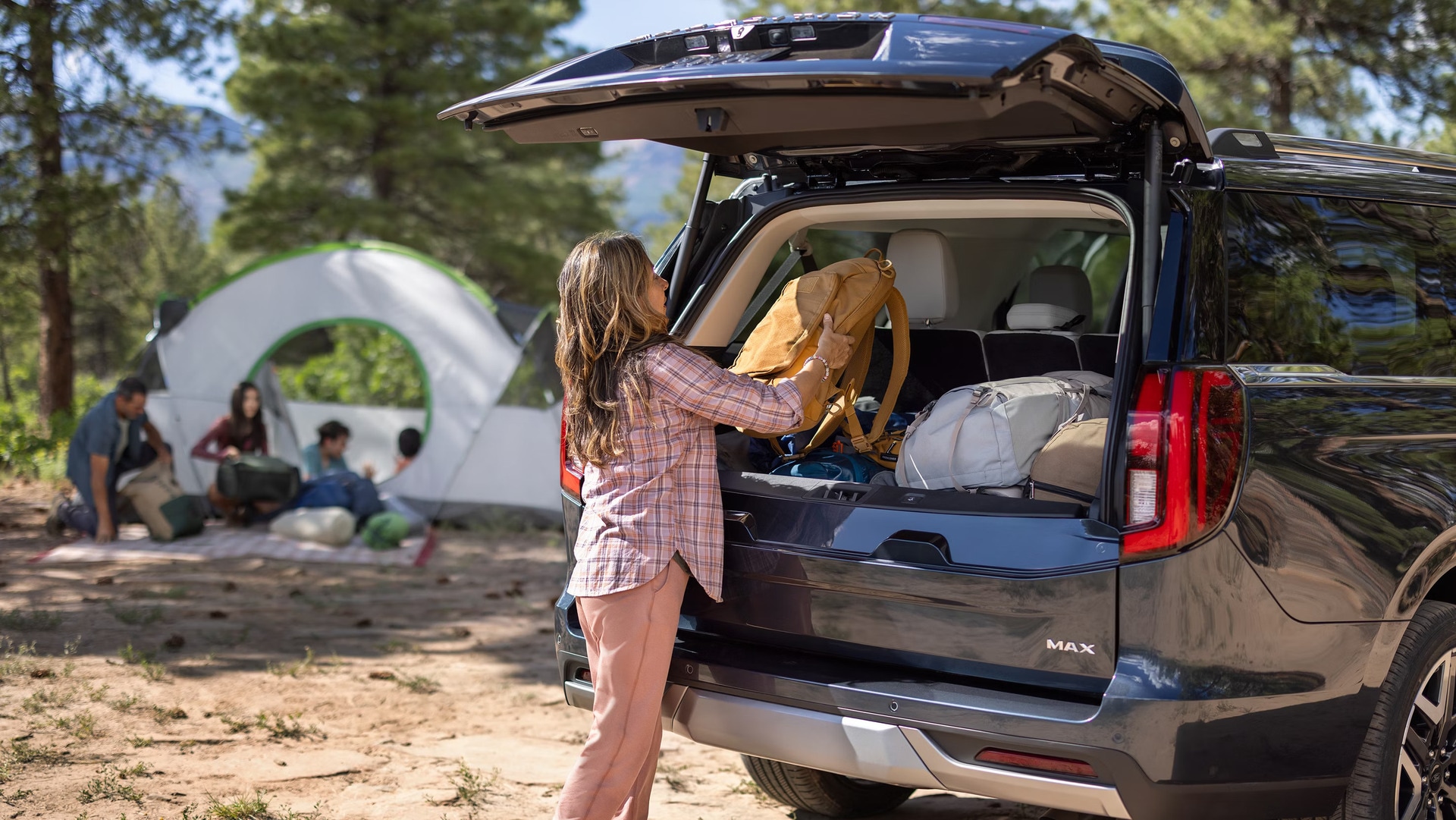
The Ford Split Gate liftgate, standard across the lineup, opens either as a full power lift or splits into a separate upper glass and lower tailgate. The lower section creates a seating ledge when loading gear, and the upper glass opens independently when overhead clearance is limited, such as a parking garage. Neither split gate function changes the cargo cubic-footage numbers, but both affect how accessible the load space is in real conditions.
2026 Expedition Towing and Capability Features
Across the Trims: Which Body and Which Trims Offer the Most Space
Koons Ford carries the full 2026 Expedition trim range. Here is how cargo and seating space maps across body configurations:
| Specification | Standard Expedition | Expedition MAX |
|---|---|---|
| Wheelbase | 122.5 in | 131.5 in |
| Cargo behind 3rd row with seats upright | 22.9 cu ft | 37.4 cu ft |
| Cargo behind 2nd row with second row full forward | 69.9 cu ft | 84.5 cu ft |
| Max cargo with all rows folded | 180.5 cu ft | 108.5 cu ft |
| 3rd-row legroom in standard position | 36.5 in | 36.5 in |
| 3rd-row legroom with 2nd row full forward | 43.5 in | 43.5 in |
| Trims | Active 4x2 and Active 4x4 | MAX Active 4x2, MAX Active 4x4, MAX Platinum 4x4, MAX King Ranch 4x4 |
Note: The Tremor 4x4 is available only in the standard body. Its lifted suspension and sport-tuned chassis reduce passenger volume slightly to 171.8 cu ft compared with 175.0 cu ft for other standard trims, and second-row headroom drops to 37.9 inches compared with 40.0 inches on non-Tremor trims. Cargo dimensions behind the third row remain consistent at 22.9 cu ft.
The Platinum 4x4 and King Ranch 4x4 are also available in the standard body at their respective trim levels, with the same cargo figures as other standard-body trims.
Compare Expedition Trims and Packages
Real-World Benefit: What These Numbers Mean Day to Day
For families in Annapolis and surrounding communities, the difference between the standard and MAX body often comes down to one specific use case: can eight people travel with real luggage?
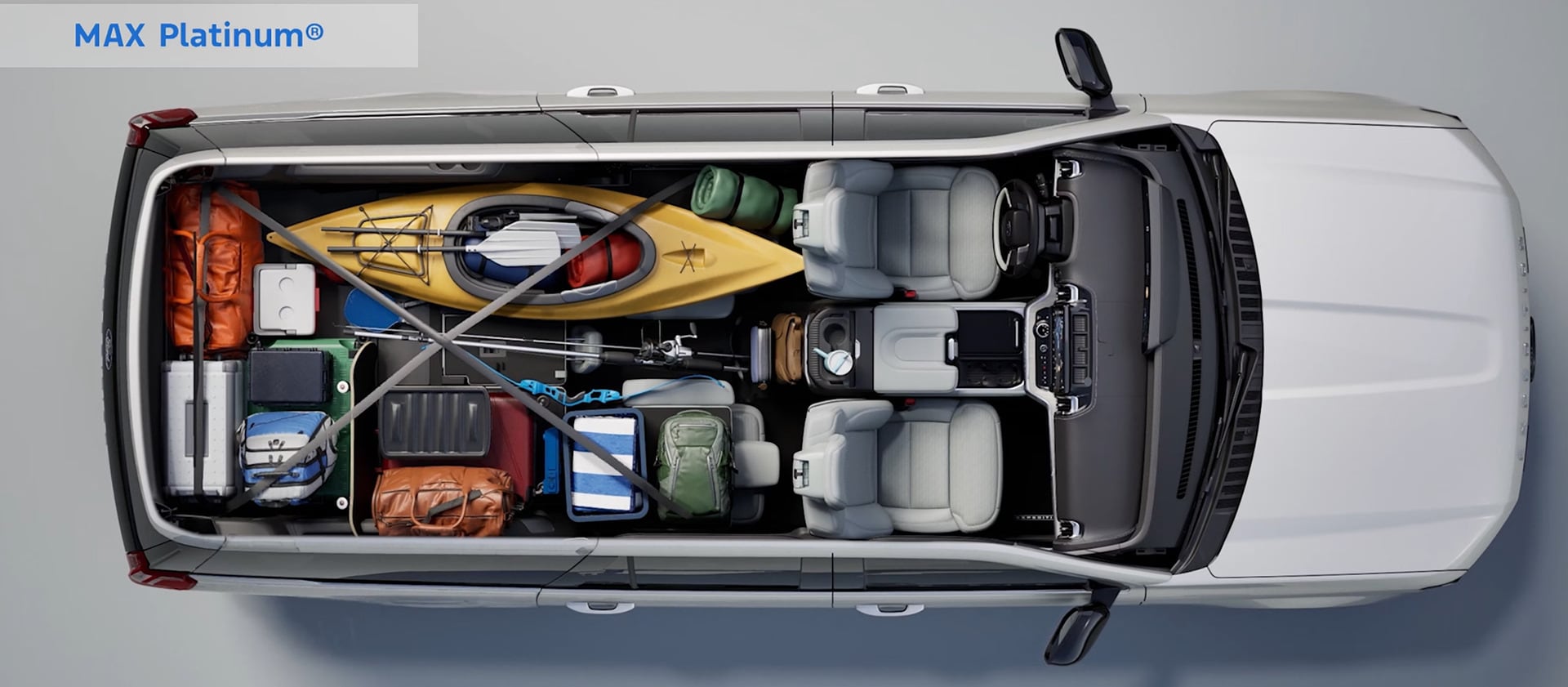
With the standard Expedition, 22.9 cu ft behind the third row holds roughly four carry-on bags or a stroller plus some groceries. That is adequate for weekend trips, but tight for a week-long road trip with all three rows occupied. The MAX's 37.4 cu ft behind the third row changes that calculation. It fits a full set of checked-size bags for a family of five without touching the seating rows.
Second-row shoulder room reaches 64.8 inches and third-row shoulder room measures 64.2 inches, or 64.3 inches on the MAX, so even three adults across the third row have genuine elbow room. Combined with 37.4 inches of third-row headroom, the cabin accommodates real passengers rather than asking adults to fold into a nominal third seat.
For cargo-only runs, the MAX's 108.5 cu ft total load space gives contractors, coaches hauling equipment, and families managing youth sports gear serious flexibility.
The 5G Wi-Fi hotspot, which connects up to 10 devices, also becomes more relevant in a MAX. More passenger space means more passengers using devices on longer hauls, and the hotspot handles all of them without a dedicated mobile plan from each rider.
How It Compares: Context Against Full-Size Rivals
The 2026 Expedition MAX's 37.4 cu ft behind the third row and 84.5 cu ft behind the second row are figures that place it at the functional top of the full-size three-row SUV segment for usable cargo with all seats occupied.
Buyers cross-shopping the Chevrolet Tahoe, Chevrolet Suburban, or GMC Yukon should request the behind-third-row number specifically, as that figure is the most relevant for real family travel. The Expedition MAX's 37.4 cu ft behind the third row is the metric to compare directly.
EPA Fuel Economy Ratings for 2026 Ford Expedition
See the 2026 Expedition MAX at Koons Ford in Annapolis
Koons Ford carries both the standard Expedition and Expedition MAX across all trim levels, from Active through King Ranch. If cargo behind the third row and genuine adult legroom in row three are your deciding factors, the MAX body resolves both. Customers from Annapolis, Severna Park, Crofton, and the broader Maryland area can view current stock, compare trims side by side, and schedule a hands-on look at how the Split Gate and Flex Console work in person.
Frequently Asked Questions
How much cargo space does the 2026 Ford Expedition have behind the third row?
The standard 2026 Expedition holds 22.9 cu ft behind the third row with seats upright. The Expedition MAX holds 37.4 cu ft behind the third row with seats upright. Both figures assume all passengers are seated.
What is the maximum cargo capacity of the 2026 Ford Expedition MAX?
The 2026 Expedition MAX offers up to 108.5 cu ft of maximum cargo capacity with both rear seating rows folded flat.
How much legroom does the 2026 Expedition have in the third row?
Third-row legroom is 36.5 inches in the standard seating position. Sliding the second row fully forward increases third-row legroom to 43.5 inches. This applies to both the standard and MAX body.
What is the difference between the Expedition and the Expedition MAX in terms of cargo?
The Expedition MAX has a 9-inch longer wheelbase. Behind the third row, the MAX holds 37.4 cu ft compared with 22.9 cu ft for the standard body. Behind the second row with the second row fully forward, the MAX holds 84.5 cu ft compared with 69.9 cu ft.
Which Expedition trims come in the MAX body?
The MAX body is available on MAX Active 4x2, MAX Active 4x4, MAX Platinum 4x4, and MAX King Ranch 4x4. The Tremor is not available in the MAX body.
Does the Expedition MAX have the same third-row legroom as the standard Expedition?
Yes. Both body lengths share the same 43.5-inch maximum third-row legroom when the second row is slid fully forward. The MAX's length advantage goes to cargo volume behind the third row, not additional seat legroom.
What is the Ford Split Gate and how does it affect cargo loading?
The Split Gate liftgate opens either as a full power gate or splits into an independent upper glass and lower tailgate. The lower section functions as a loading ledge. This makes loading the cargo area easier in tight spaces, though it does not change the cubic-footage cargo numbers.
Does the Tremor trim have different cargo or interior dimensions?
Yes, slightly. The Tremor's lifted suspension and unique chassis configuration reduce passenger volume to 171.8 cu ft compared with 175.0 cu ft for other standard trims and reduce second-row headroom to 37.9 inches compared with 40.0 inches. Cargo behind the third row remains 22.9 cu ft. The Tremor is not available in the MAX body.