

2026 Ford Explorer 3rd-Row Seating: Space, Specs, and Trim Breakdown
The 2026 Ford Explorer delivers 31.8 inches of third-row legroom across a 150.3 cubic foot passenger volume. That third-row space is unchanged between most trims, though the Platinum's panoramic roof structure trims total passenger volume to 143.8 cu ft. This page covers every third-row dimension, how each trim configures that space, and where to find current Explorer inventory at Koons Ford.
Third-Row Feature Overview
Seven-seat capacity is standard on every 2026 Explorer trim from the Active through the ST. That means Annapolis families, Bowie commuters hauling kids, and anyone cross-shopping the segment can access genuine third-row seating without paying for a higher trim.
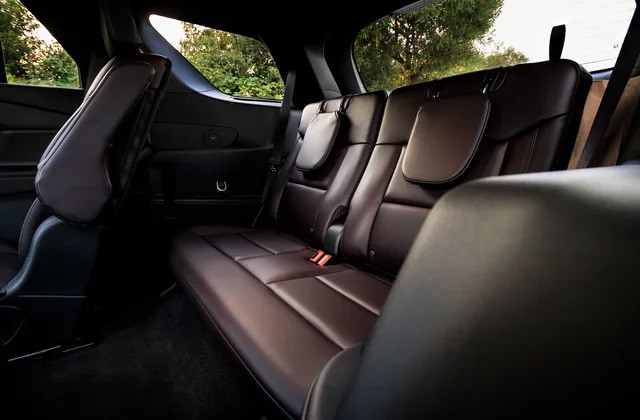
The third row delivers 31.8 inches of legroom, 40.9 inches of hip room, and 54.6 inches of shoulder room. Those numbers put the Explorer's rearmost row in practical territory for adults on shorter trips and comfortably sized for children on any drive.
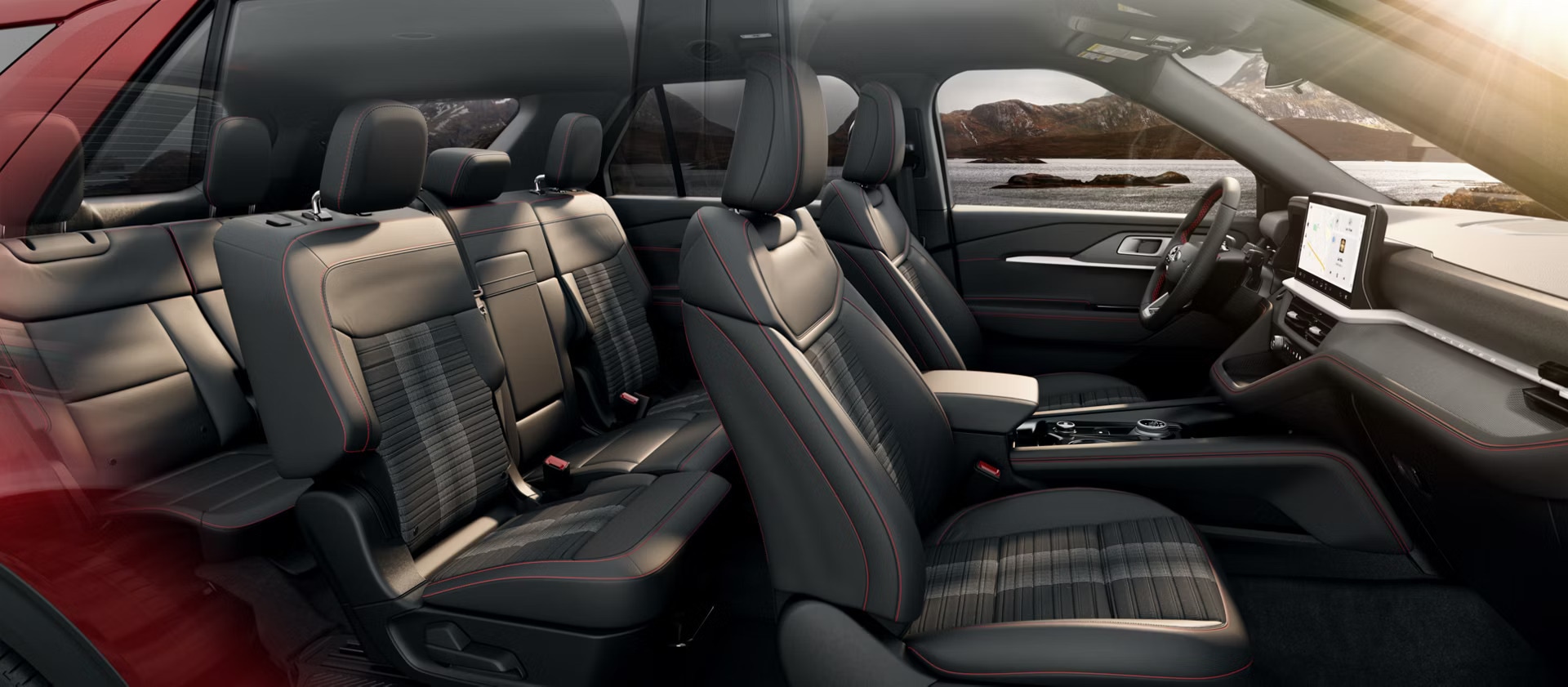
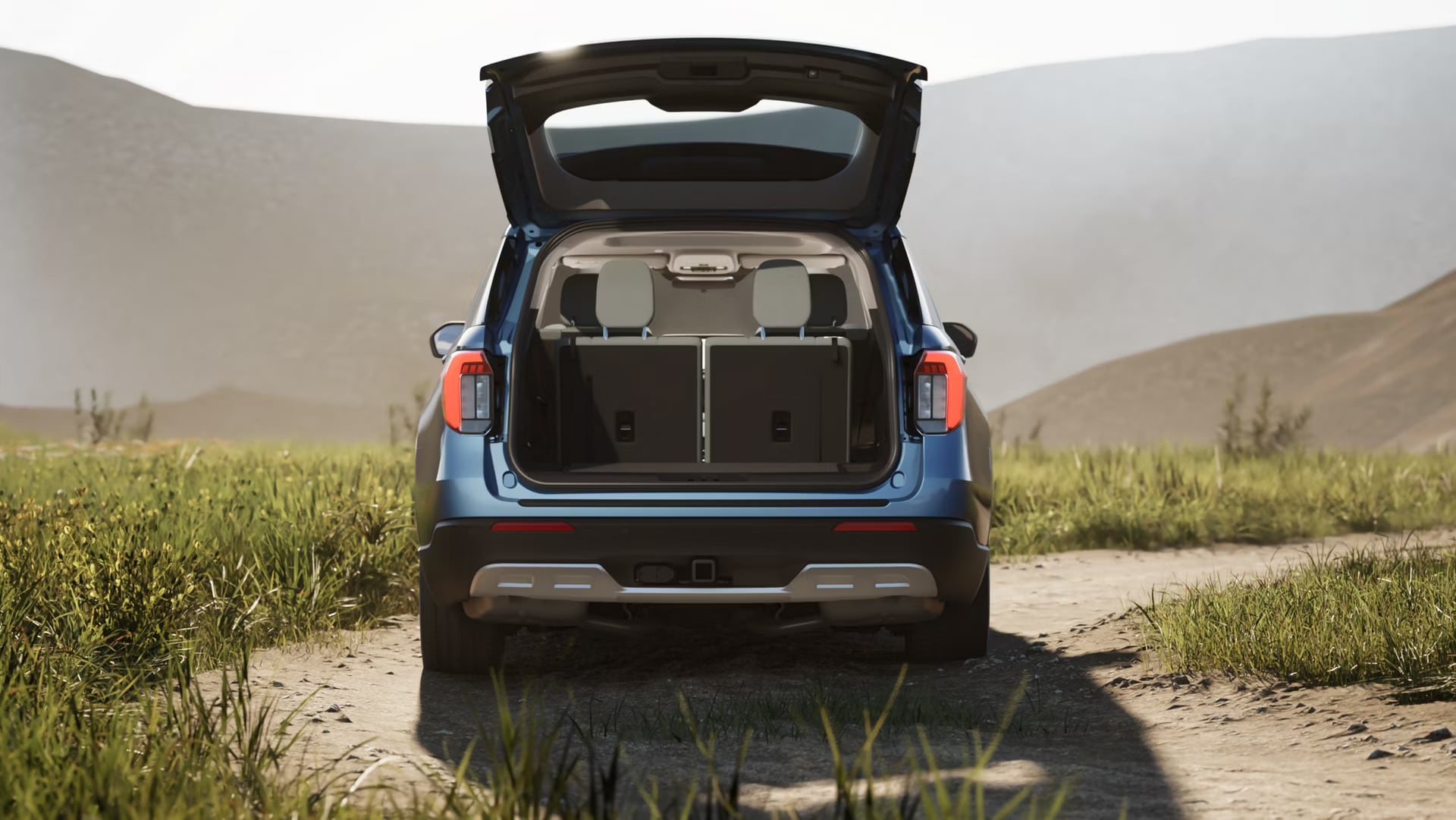
Behind that third row sits 16.3 cubic feet of cargo space, roughly equivalent to a large rolling suitcase. Fold the third row and usable cargo volume jumps to 46 cubic feet behind the second row. Fold both rows and the Explorer opens to 85.8 cubic feet, enough for a full weekend haul from the Maryland Eastern Shore or a Costco run near the Annapolis store.
2026 Ford Explorer full specs and trims
How the Third-Row Space Works
The Explorer's third row is set on a 119.1-inch wheelbase, and Ford's packaging decision to extend rear overhang to 46 inches contributes directly to livable rearmost-row dimensions. The multi-link independent rear suspension sits below the floor rather than intruding into the cabin, which is the engineering choice that allows 31.8 inches of rear legroom without requiring an awkward raised step-in.
Getting into the third row is managed through second-row seats that tip and slide forward. The 198.7-inch overall length and 69.6-inch height (taller on the Tremor and Platinum) keep ingress practical.
Headroom in the third row measures 38.9 inches on Active, ST-Line, Tremor, and ST trims. That figure holds steady across those four variants. The Platinum configuration, which carries a panoramic fixed glass roof, has not been separately spec'd for third-row headroom changes in the provided data, though its taller 70.2-inch overall height works in favor of rear passengers.
For cargo management, the 16.3 cubic feet behind row three is the floor figure. The 85.8 cubic foot maximum cargo number (85.3 on ST, Platinum, and Tremor) is reached only with both rows folded.
EPA fuel economy ratings for 2026 Ford Explorer
Third-Row Space Across the Trims
The third-row dimensions are consistent across the lineup, but supporting features and overall cabin environment vary meaningfully by trim.
Active (100A and AWD): Entry trim with the full 150.3 cu ft passenger volume and standard 31.8 in. third-row legroom. No panoramic roof on the 100A, keeping that full headroom number intact.
Active
Active (100A and AWD): Entry trim with the full 150.3 cu ft passenger volume and standard 31.8 in. third-row legroom. No panoramic roof on the 100A, keeping that full headroom number intact.
ST-Line
ST-Line (RWD and AWD): Adds Ford Co-Pilot360 Assist 2.0 with a 360-Degree Camera, which helps during tight parking maneuvers when the third row is occupied and sightlines are reduced. The B&O 10-speaker sound system fills that 150.3 cu ft passenger cabin evenly. A panoramic fixed glass roof is available, giving third-row passengers an open, airy feel on the drive from Annapolis down Route 50.
Tremor
Tremor (AWD): Ground clearance rises to 8.7 inches and the approach angle reaches 24.1 degrees. Third-row legroom stays at 31.8 inches. Passenger volume measures 149.5 cu ft on the Tremor. The standard Intelligent 4WD on this trim means third-row passengers ride confidently on gravel roads, boat ramp approaches, or unpaved state park access routes.
Platinum
Platinum (RWD and AWD): The Platinum's taller 70.2-inch height can benefit third-row headroom in practice, though the overall passenger volume is 143.8 cu ft due to roof structure. Ford BlueCruise Hands-Free Highway Driving is standard, letting the driver focus on the road while third-row passengers settle in for longer interstate legs.
ST
ST (RWD and AWD): The performance-focused ST runs the 3.0L twin-turbocharged EcoBoost V6 producing 385 hp and 415 lb-ft of torque (on premium fuel). Third-row legroom holds at 31.8 inches, and passenger volume is 149.5 cu ft. BlueCruise is also standard on the ST, and the available 14-speaker 980-watt B&O system delivers sound that reaches the back row without distortion.
2026 Ford Explorer safety features

Real-World Benefit for Third-Row Passengers and Drivers
For families using the Explorer near Annapolis, the third row is not a novelty seat. The 31.8-inch legroom figure is a usable number for adults on a 45-minute school run or a drive to BWI. Shoulder room at 54.6 inches means two average-sized adults fit side by side without contact.
Drivers benefit from the Terrain Management System's six drive modes, which include a Tow/Haul setting for when a loaded third row is combined with a trailer. The Explorer tows up to 5,000 pounds, and having a full seven-passenger cabin plus trailer capability serves the kind of combined-use scenario that comes up frequently for Maryland families managing boats, campers, or utility trailers.
Tri-Zone Automatic Climate Control, standard across the lineup, means third-row occupants control their own temperature zone independently. On the 29-mpg highway 2.3L EcoBoost model, that climate comfort comes without a major fuel penalty.
Wireless Apple CarPlay and Android Auto on the 13.2-inch SYNC touchscreen and a 12.3-inch Digital Instrument Cluster keep the driver connected without needing a co-pilot to manage navigation, which frees attention for the third-row passengers when traveling with a mixed group of ages.
How the Explorer's Third Row Compares
The Explorer's 31.8 inches of third-row legroom sits at the upper range of the three-row midsize SUV segment. Many rivals in this class provide third rows better described as occasional-use than everyday-use. The Explorer's 40.9 inches of third-row hip room and 54.6 inches of shoulder room support genuine two-adult occupancy.
The 85.8 cubic foot maximum cargo figure is a strong result for a vehicle this size. Competitors in the segment often sacrifice cargo depth to achieve a flatter load floor, but the Explorer preserves both the load capacity and the passenger volume.
No specific competitor dimensions are published in the provided brief, so direct numeric comparisons are not made here. What the Explorer's own figures confirm is that Ford did not treat the third row as an afterthought on a seven-passenger claim.
See the 2026 Ford Explorer at Koons Ford in Annapolis
The third-row specs above are consistent across every 2026 Explorer in current inventory. Koons Ford in Annapolis carries Active, ST-Line, Tremor, Platinum, and ST trims, so comparing the cabin firsthand against your family's actual needs is straightforward. A single test drive with all three rows occupied tells more than any spec sheet.
Frequently Asked Questions
Does the 2026 Ford Explorer have a true third row for adults?
Yes. The 2026 Explorer offers 31.8 inches of third-row legroom, 40.9 inches of hip room, and 54.6 inches of shoulder room. Those figures support two adults side by side for moderate-length trips.
Which 2026 Explorer trims have a third row?
All 2026 Explorer trims, Active through ST, are seven-passenger vehicles with a full third row included as standard.
How much cargo space is behind the third row on the 2026 Explorer?
16.3 cubic feet sits behind the third row. With the third row folded, that grows to 46 cubic feet. With both rows folded, maximum cargo reaches 85.8 cubic feet (85.3 on ST, Platinum, and Tremor trims).
Does the Platinum trim change third-row space?
The Platinum's overall passenger volume is 143.8 cubic feet, compared to 150.3 cubic feet on Active and ST-Line trims. Third-row legroom remains 31.8 inches. The Platinum is also taller at 70.2 inches, which can benefit the perceived airiness of the rear cabin.
Does the Tremor trim affect third-row passenger space?
The Tremor's passenger volume is 149.5 cubic feet. Third-row legroom stays at 31.8 inches. The Tremor's 8.7-inch ground clearance and Intelligent 4WD add off-road utility without reducing rear-seat occupant space.
Is Tri-Zone Climate Control available for third-row passengers on every trim?
Yes. Tri-Zone Automatic Climate Control is standard on all 2026 Explorer trims, giving third-row occupants their own temperature zone on every version of the vehicle.
What is the maximum towing capacity on the 2026 Explorer when carrying seven passengers?
The 2026 Explorer tows up to 5,000 pounds regardless of passenger count configuration. The 2.3L EcoBoost standard engine produces 300 hp and 310 lb-ft of torque to support both full occupancy and a loaded trailer.
